
1885 - 1916

CPL David Wallace Crawford
1887 - 1916

Lce-Corpl John Joseph Nickle
1894 - 1916

Pte 17911 Morton Neill
1897 - 1916

Lieut Edward Stanley Ashcroft
1883 - 1918

Pte 300256 Richard Gwilt
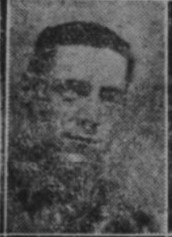
- Age: 29
- From: Birmingham
- Regiment: The King's (Liverpool Regiment) 18th Btn
- K.I.A ???? Friday 28th June 1918
- Commemorated at: Berlin South West Cem
Panel Ref: I.C.7
Richard Gwilt was the son of John Gwilt and his wife Ann (nee Hughes). He was born in Birmingham on 04th October 1888.
The 1891 Census finds the family living at Wellington Street, Birmingham. Richard is a 4 year old schoolboy living with his parents and four siblings. His father, John is a 52 year old, born in Wilcot, Shropshire and whose occupation is described as beer house and grocer. His mother, Ann, is 39 and was born in Clun, Shropshire. All of their children were born in Birmingham and Richard's siblings are; Fanny aged 12, Nathaniel aged 9, John aged 8 and William aged 2. Also declared in the household are visitors Rebecca Tomlinson aged 7 and new born Alfred Cook.
The 1901 Census shows the family are living at 88 Wellington Street, Birmingham. Richard now aged 14 is a carter, he lives with his parents and two brothers. His father is now aged 63 and a grocer, his mother is 49. His brothers, John aged 17 and William aged 13 do not have an occupation listed.
His father died in 1903 and his widowed mother Ann married John Vaughan in 1910 in Droitwich, Worcestershire.
Before the war Richard was a baker’s horse keeper, employed by Messrs Price Brothers, Bakery, Montague Road. He lived at 257 Montague Road with his mother Ann and stepfather John Vaughan.
He enlisted in May 1915 and was serving with the Lancashire Hussars as Private 250660 before he transferred to the 18th Battalion of The King's Liverpool Regiment as Private 300256.
He was taken Prisoner of War at Vaux on 22nd March 1918 during the German Spring Offensive in March 1918.
He died of pneumonia on 28th June 1918 at the PoW Hospital in Stendal, Germany and he now rests at Berlin South West Cemetery.
In 1922-23 it was decided that the graves of Commonwealth servicemen who had died all over Germany should be brought together into four permanent cemeteries. Berlin South-Western was one of those chosen and in 1924-25, graves were brought into the cemetery from 146 burial grounds in eastern Germany. There are now 1,176 First World War servicemen buried or commemorated in the Commonwealth plot at Berlin South-Western Cemetery. The total includes special memorials to a number of casualties buried in other cemeteries in Germany whose graves could not be found. The following cemeteries are among those from which graves were brought to Berlin South-Western Cemetery:- ALTDAMM PRISONERS OF WAR CEMETERY, 8 kilometres East of Stettin, in the Province of Pommern (Pomerania), contained the graves of 46 soldiers from the United Kingdom, three from Newfoundland and two from Canada, who died in 1915-1918. BUDEROSE PRISONERS OF WAR CEMETERY, near Guben, in the Province of Brandenburg, contained the graves of 18 soldiers from the United Kingdom, one from Canada and one from Australia, all of whom died in 1918. CROSSEN PRISONERS OF WAR CEMETERY, 3 kilometres East of Crossen, on the river Oder, in the Province of Brandenburg, contained the graves of 66 sailors and soldiers from the United Kingdom, one from Australia and one from South Africa all of whom died in 1918. DOBERITZ PRISONERS OF WAR CEMETERY, about 19 kilometres West of Berlin, in the Province of Brandenburg, contained the graves of 38 sailors and soldiers from the United Kingdom who died in 1914-1918. HASENHEIDE GARRISON CEMETERY, on the South side of the city of Berlin, contained the graves of 369 Russian, 125 French, and 58 Belgian, American, Italian, Rumanian, Portuguese or Serbian soldiers; 63 sailors, soldiers and Marines from the United Kingdom; and one Indian soldier. HEILSBERG PRISONERS OF WAR CEMETERY, in Ostpreussen (East Prussia), contained the graves of 50 soldiers and one Marine from the United Kingdom, who died in 1917 and 1918. Only twelve of which were found when the graves were being recovered; the remainder are still buried at Heilsberg. KLEIN WITTENBERG OLD CEMETERY, 3 kilometres West of Wittenberg, in the Prussian province of Saxony, contained the graves of 23 soldiers, one Marine and eight civilians from the United Kingdom and one soldier from India, all of whom died in 1915; the NEW (or PRISONERS OF WAR) CEMETERY, those of 71 soldiers and three civilians from the United Kingdom, two soldiers from Canada and one from Australia, who died in 1915, 1917 and 1918; and WITTENBERG OLD SMALL CEMETERY those of two soldiers from the United Kingdom who died in 1914 and 1915. The first and third of these cemeteries are associated with the outbreak of typhus at the Wittenberg camp in December 1914. LAMSDORF PRISONERS OF WAR CEMETERY, in Schlesien (Silesia), contained the graves of 81 soldiers from the United Kingdom, one from Australia and one from New Zealand, who died in 1917-1919 (it was used for French burials in 1870-71). MAGDEBURG MILITARY CEMETERY, in Prussian Saxony, contained the graves of 24 soldiers and one Marine from the United Kingdom who died in 1915-1918. MERSEBURG TOWN CEMETERY, in Prussian Saxony, contained the graves of 12 soldiers from the United Kingdom who died in 1914-1917, and the PRISONERS OF WAR CEMETERY those of 33 soldiers from the United Kingdom who died in 1917-1918. OPPELN TOWN CEMETERY, in Upper Silesia, contained the graves of 41 soldiers from the United Kingdom who died in 1921-22. They belonged to the British force stationed in Upper Silesia during the Plebiscite. Thirty of them, who died after the legal termination of the war, were left buried at Oppeln. SCHNEIDEMUHL PRISONERS OF WAR CEMETERY, in Posen, West Prussia, on the borders of Poland, contained the graves of 76 soldiers from the United Kingdom, five from Australia, three of the Royal Guernsey Light Infantry, and one from Canada, who died in 1915-1918. Eighteen of the graves could not be recovered. STARGARD PRISONERS OF WAR CEMETERY, in Pomerania, contained the graves of 37 soldiers and one Marine from the United Kingdom, two soldiers from New Zealand and one of the Royal Guernsey Light Infantry, who died in 1917-1918. STENDAL PRISONERS OF WAR CEMETERY, in Prussian Saxony, contained the graves of 140 soldiers from the United Kingdom, two from Canada and one from Newfoundland, who died in 1917-1918. ZERBST (HEIDETOR) CEMETERY, in Anhalt, contained the graves of two soldiers from the United Kingdom who died in 1914-1915, and the PRISONERS OF WAR CEMETERY those of 45, who died in 1917-1918.
The stress of Richard being declared Missing obviously weighed on his mother as the Newspaper report show:
Birmingham Evening Dispatch, 22nd May 1918:
“Mrs. Gwilt, of 75 Woodland Street, Smethwick, has received an intimation from his officer that her son, Private Richard Gwilt (No.300256) of the 18th King’s Liverpool Regiment, has been missing since 22 March. News of him would be welcomed.”
He was declared as a POW in the Smethwick Telephone, 20th July 1918:
“Mrs. Vaughan, 75 Woodlands Street, has been informed that her son, Private Richard Gwilt, of the 1/1st Lancashire Hussars (attached to the K.L.R.), who has been missing since March 21st, is a prisoner of war in Germany.”
His mother's delight that her son was alive was sadly removed as described again in the Press. Note the date of the report is after the Armistice and would have been even more painful to receive.
Smethwick Telephone, 21st December 1918:
“News has been received that Pte Richard Gwilt, formerly of the Lancashire Hussars (attached to the 18th King’s Liverpool Regt), died from pneumonia on 28th June in the Prisoner of War Hospital in Stendal, Germany. He resided at 75 Woodlands Street, Smethwick. He enlisted in May 1915 and went to France the following January, and was taken prisoner on the St. Quentin front in March 1918. The deceased was an employee at Messrs. Price Bros., bakers, Montague Road.”
We currently have no further information on Richard Gwilt. If you have or know someone who may be able to add to the history of this soldier, please contact us.
Killed On This Day.
(109 Years this day)Friday 20th April 1917.
Pte 57400 Roderick Chisholm
21 years old
(109 Years this day)
Friday 20th April 1917.
Pte 73671 Ellis Marsden
39 years old
(108 Years this day)
Saturday 20th April 1918.
2nd Lieut Harry Crook
44 years old
(108 Years this day)
Saturday 20th April 1918.
Pte 86268 George John Fasham
30 years old
(108 Years this day)
Saturday 20th April 1918.
Pte 20781 John Green
25 years old
(108 Years this day)
Saturday 20th April 1918.
Sgt 57856 Hugh Shotton
24 years old
(108 Years this day)
Saturday 20th April 1918.
Pte 90940 Frederick William Tomlinson
19 years old
(108 Years this day)
Saturday 20th April 1918.
Sgt 23876 Henry Young
22 years old