
1885 - 1916

CPL David Wallace Crawford
1887 - 1916

Lce-Corpl John Joseph Nickle
1894 - 1916

Pte 17911 Morton Neill
1897 - 1916

Lieut Edward Stanley Ashcroft
1883 - 1918

Pte 17611 Gilbert Smedley Golding
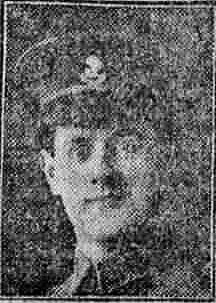
- Age: 23
- From: Staindrop, Durham
- Regiment: The King's (Liverpool Regiment) 19th Btn
- K.I.A Sunday 30th July 1916
- Commemorated at: Thiepval Memorial
Panel Ref: P&F1D8B &8 C.
Gilbert Smedley Golding was born in about October 1892, at Staindrop, Teesdale, County Durham, 25 miles west of Middlesbrough, the son of Reverend Harry Golding and his wife Justina (nee Smedley) who married in Teeside in 1892. Harry, born in Blackheath, Staffordshire, and Justina, in Great Bardfield, Essex.
Gilbert had a younger brother Cecil Smedley, who was born in 1894.
At the time of the 1901 Census the family were living in a village called Low Row, near Richmond, in the Yorkshire Dales where Harry was a Congregational Minister. The couple, both aged 33, have two sons in the household, Gilbert aged 8 and Cecil aged 6. Also in the household is his aunt Eva Eliza Smedley, 38, born in Norfolk.
From 1902 to 1910 his father was the minister of Castleton Congregational Church, 18 miles southeast of Middlesbrough.
Gilbert and Cecil were educated at Silcoates Congregational School in Wrenthorpe, near Wakefield, Yorkshire, which had been founded in 1820 for the education of sons of non-Conformist clergy. In 1904 after fire destroyed the school premises during the Easter holidays, the school was housed temporarily in Harrogate and later in Saltburn on the North Yorkshire coast. The school reopened in 1908 and at the first Speech Day since the opening of the new premises, in July 1909, the Modern Languages Prize of £5 given by the Silcoates Old Boys Association was awarded to G. S. Golding, who also earned football Colours.
By the time of the 1911 Census the family had moved to Liverpool and were living at 55 Pemberton Road in Old Swan. Harry was still a Minister in the Congregational Church. His parents were both 43. Gilbert was a university student aged 18.
His brother, Cecil, is found on a 1913 passenger list, age 18, occupation farmer, religion Congregationalist, arriving in Halifax, Nova Scotia from Liverpool, destination Winnipeg.
Prior to the war Gilbert was engaged as an assistant master at a school in Birmingham.
He enlisted on 11th September 1914 at Liverpool, joining the 19th Battalion, The King’s Liverpool Regiment as Private No 17611. He gave his age as 21 years and 11 months and gave his occupation as a school master. He was five feet six and three quarter inches tall, weighed 119lbs, 35" chest with a sallow complexion, grey eyes and brown hair. He stated his religion as Congregationalist and gave, as next of kin, his father at 55 Pemberton Road.
Formed on 7th September 1914 the 19th Battalion trained locally at Sefton Park and remained living at home or in rented accommodation until November 1914. They then moved to the hutted accommodation at Lord Derby’s estate at Knowsley Hall. On 30th April 1915 the 19th Battalion alongside the other three Pals battalions left Liverpool via Prescot Station for further training at Belton Park, Grantham. They remained here until September 1915 when they reached Larkhill Camp on Salisbury Plain.
07.11.15: Embarked for France with his battalion.
28.12.15: Dirty on guard mounting.
02.3.16: Sick to 98th Field Ambulance I.C.T. neck.
07.3.16: To 3 Ambulance Flotilla (barges located along the Somme at Chipilly).
11.3.16: Discharged to duty.
21.7.16: Appointed unpaid Lance Corporal.
He was killed in action on the 30th July 1916, aged 24, at the village of Guillemont, France, during the Somme Offensive.
19th Battalion Diary
MALTZ HORN FARM
BATTLE begun. ZERO hour 4:45 am. The Battalion reached its objective, but suffered heavy losses, and had to evacuate its position owing to no reinforcements.
Everard Wyrall gives details of the attack in his book The History of The King’s Regiment;
"The 2nd Attack on Guillemont- 29th July 1916 the 89th Brigade the 20th King's were to attack on the right and the 19th on the left. During the evening of the 29th the night was dark and foggy when the Battalions moved off and the 19th with Lt Col G Rollo commanding, when passing the South east of the Briqueterie they were heavily shelled first with H E and then with a new kind of asphyxiating Gas shell which had curious results, at first it had no nasty effect but about 8 hrs later men began to fall sick with violent headaches and pains in the stomach. All ranks had to wear gas masks which in the darkness and mist made the going terribly difficult. It was indeed wonderful that they were able to reach their Assembly point at all. But they did and by 2.45 a.m. on the 30th July 1916 the Btn was assembled having suffered about 30 Casualties on the way up ready for the Zero hour at 4.45 a.m.
It is known that the two left Companies of the 19th under Capt. Dodd and Capt. Nicholson advanced in touch with the 2nd Royal Scots Fusiliers on their left although they suffered many casualties from Machine gun Fire did not encounter many Germans and reached their final objective about the time allocated, beginning at once to dig in south of the orchard on the South east corner of Guillemont.
On the left of the 19th the Scots Fusiliers most gallantly forced their way through Guillemont to the eastern side of the village but were soon overwhelmed by the enemy and few returned.
At 8 a.m. finding that the village was not held the two left Companies of the 19th received no word from the rear or either flank believed themselves to be totally isolated so were forced to fall back and dig in, their position being untenable.
At midday the effective fighting strength of the 19th Btn was just 7 Officers and 43 other ranks"
When darkness fell on the battlefield the 30th Division held a line from the railway on the eastern side of Trones Wood , southwards and including Arrow Head Copse, to east of Maltz Horn Farm. On this line the division was relieved by the 55th Division during the early hours of the 31st July.
Casualties in the 19th Battalion were 11 Officers and 435 Other Ranks
The events of 30th July 1916 were regarded at the time as Liverpool’s blackest day. There follows an extract from The History of the 89th Brigade written by Brigadier General Ferdinand Stanley which gives an indication of the events of the day.
Guillemont
Well the hour to advance came, and of all bad luck in the world it was a thick fog; so thick that you couldn’t see more than about ten yards. It was next to impossible to delay the attack – it was much too big an operation- so forward they had to go. It will give some idea when I say that on one flank we had to go 1,750 yards over big rolling country. Everyone knows what it is like to cross enclosed country which you know really well in a fog and how easy it is to lose your way. Therefore, imagine these rolling hills, with no landmarks and absolutely unknown to anyone. Is it surprising that people lost their way and lost touch with those next to them? As a matter of fact, it was wonderful the way in which many men found their way right to the place we wanted to get to. But as a connected attack it was impossible.
The fog was intense it was practically impossible to keep direction and parties got split up. Owing to the heavy shelling all the Bosches had left their main trenches and were lying out in the open with snipers and machine guns in shell holes, so of course our fellows were the most easy prey.
It is so awfully sad now going about and finding so many splendid fellows gone.
He was initially declared Missing in Action in the Liverpool Daily Post on Monday 18 September 1916:
Missing.
King’s(Liverpools) - Golding, 17611, G. S.;
His parents appealed for information in the Liverpool Echo on 08th September 1916 under the heading "Liverpool Minister's Son".
An entry on his Casualty Form shows that a report was received on 04th September 1916, "Buried by 1/4th (LNL)".
The site of his burial must have been destroyed as Gilbert has no known grave and is commemorated on the Thiepval Memorial .
The Thiepval Memorial, the Memorial to the Missing of the Somme, bears the names of more than 72,000 officers and men of the United Kingdom and South African forces who died in the Somme sector before 20 March 1918 and have no known grave. Over 90% of those commemorated died between July and November 1916.
On 01st August 1932 the Prince of Wales and the President of France inaugurated the Thiepval Memorial in Picardy. The inscription reads: “Here are recorded the names of officers and men of the British Armies who fell on the Somme battlefields between July 1915 and March 1918 but to whom the fortune of war denied the known and honoured burial given to their comrades in death.”
A memorial service was reported in the Rochdale Times on Wednesday 04 October 1916:
CASTLETON.
Memorial Service—A service to the memory of the late Private Ernest Watson, Private Alfred Hamer, Manchester Road, Castleton, of whom have recently been killed in France, and Gilbert Golding (son of the Rev. H. Golding, who was for seven years pastor of the Castleton church), and who has also made the great sacrifice, was held on Monday evening in the Castleton Congregational Church. A large congregation was present, including members of the families of Privates Watson and Hamer. The members of the committee and players of the Congregational Football Club were also present, both lads having been closely connected with it. The service was very impressive, the choir rendering the anthem, "0 day spring," and the hymns sung were "Now the labourer's task is o'er " and “God the All-Terrible." During the service the Sunday school superintendent, Mr. F. Thompson, read the names on the roll of honour. In the course of the sermon the Rev. J. Willcock made a sympathetic reference to the three lads.
Gilbert is also remembered on the War Memorial at Silcoates School in Wakefield for old boys who lost their lives in WW1 which was erected in 1920 at the time of the school's centenary.
His father received Gilbert's outstanding Army pay and a War Gratuity of £8-10s. From the pension card in the name of his mother it is not apparent that a pension was awarded.
In 1919 his parents still lived at 55 Pemberton Drive. His brother Cecil had died.
His parents are found on electoral rolls in Pemberton Road until 1924. His father later served a congregation in Burnley, before moving to Troutbeck Bridge, Windermere. After his retirement in about 1933 they remained in Windermere.
On the 1939 register his parents are living at 1 Tennis View, Broad Street, Windermere. They are both 72 years old. Living with them is Justina's brother, George A Smedley, 75, a retired grocer.
His father died aged 73 in 1940 in a mental hospital in Carlisle. His newspaper obituary stated that he had lost both sons, the elder in the Great War, and the younger in a farming accident in Canada. When his mother died in 1943, aged 74, her estate of £1630 went to her brother George Albert Smedley and Charles Heaven, a retired schoolmaster.
His father's death was reported in the Rochdale Observer on Saturday 10 February 1940:
FORMER CASTLETON PASTOR’S DEATH
Many older residents of the district will hear with regret of the death of the Rev. Harry Golding, which occurred at his residence, Tennis View, Windermere, recently. From 1902 to 1910, Mr. Golding was minister of the Castleton Congregational Church, and it was during his ministry that the church became self-supporting and undertook building extensions. Mr. Golding left Castleton for Knotty Ash, Liverpool, and later moved to Burnley before accepting a call to Troutbeck Bridge, Windermere. His last seven years have been spent in quiet retirement on the shores of Lake Windermere. Mrs. Golding survives her husband. Both sons have been killed, the elder in France in the Great War, and the younger in an accident whilst farming in Canada.
We currently have no further information on Gilbert Smedley Golding. If you have or know someone who may be able to add to the history of this soldier, please contact us.
Killed On This Day.
(110 Years this day)Thursday 16th November 1916.
Pte 52229 Edward Jackson
23 years old
(110 Years this day)
Thursday 16th November 1916.
L/Cpl 52177 Fred Meakin
27 years old
(110 Years this day)
Thursday 16th November 1916.
Pte 28307 Edward Weston
42 years old
(109 Years this day)
Friday 16th November 1917.
Sgt 17286 Leonard Wilson Blackstone
24 years old
(109 Years this day)
Friday 16th November 1917.
Sgt 22407 Edwin Hill
30 years old