
1885 - 1916

CPL David Wallace Crawford
1887 - 1916

Lce-Corpl John Joseph Nickle
1894 - 1916

Pte 17911 Morton Neill
1897 - 1916

Lieut Edward Stanley Ashcroft
1883 - 1918

2nd Lieut Philip James Furlong
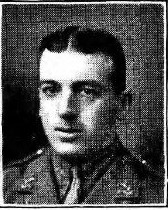
- Age: 28
- From: Dublin
- Regiment: The King's (Liverpool Regiment) 19th Btn
- K.I.A Sunday 30th July 1916
- Commemorated at: Thiepval Memorial
Panel Ref: P&F1D8B &8 C.
Philip James Furlong was born in Dublin on the 05th May 1888 and the son of Thomas James Furlong and his wife Josephine (nee McCarthy). He was baptised on 13th May 1888, his parents' residence at the time 28 Rathmines Road, Dublin. His father was born in County Carlow, and his mother in Dublin. They married in 1877 in St. Michan's Church, Dublin. Philip was the youngest of their five children. He had brothers Thomas Joseph Cuthbert and Allan, and sisters Josephine Mary and Elizabeth Mary Margaret.
At the time of the Irish 1901 Census he was living with his parents and siblings at Leinster House, Leinster Road, Rathmines Dublin. His father is 65, and his mother 62 (these ages do not appear correct). Thomas, 21, is a solicitor's apprentice, Josephine, 19, has no occupation, and 12-year old Philip is at school. Also in the household is his uncle Cuthbert Furlong, 49, living off house property income, and a domestic servant. Allan, 15, is a pupil in a Mount St. Mary's Roman Catholic College in Eckington, Derbyshire.
By the 1911 census the family were still living at Leinster Road in Dublin. His parents' ages differ from the previous census; his father is now 78, and his mother 60. They have two domestic servants and their five children are at home. Thomas, 30, is a solicitor, Josephine, 27, and Eliza, 26, have no occupation, Allan, 24, is a solicitor's clerk, and Philip is 22, a solicitor's apprentice.
Philip was educated at St Mary’s College and Royal University Dublin where he was studying law with the intention of qualifying as a solicitor
According to an article in the Law Society of Ireland Gazette, Philip was apprenticed to his father on 18th March 1901, whose business premises were in Eustace Street.
He obtained his Commission on 16th April 1915 and served in France and Flanders from March 1916. He served as a 2nd Lieutenant in the 19th Battalion of The King’s Liverpool Regiment. He arrived in France on 20th March, 1916, and joined the Battalion for duty on 26th March 1916 when it was billeted at Franvillers on the Somme.
Philip was killed in action on the 30th July 1916, aged 28, at the village of Guillemont, France, during the Somme Offensive.
The Battalion’s objectives on the day were the German trenches on the South Eastern edge of Guillemont, which was a heavily fortified village on top of a gentle slope, with a front of about seven hundred yards. Each end of the front was also defended by Machine-guns, which could give covering and enfilading fire. The line of attack was entirely without cover. The 19th Battalion was on the left flank of the attack of the 89th Brigade advance, which began at 04.45 in a thick and heavy fog, it was heavily bombarded with high explosive and gas shells, which added to the confusion and consequent loss of direction. Despite this, the edge of the village was reached, but th 19th Battalion was unable to link up with the Battalion on its left, the 2nd Royal Scots and found both its flanks in the air. The fog began to lift allowing the German machine gunners a clear field of fire and their numbers were augmented by Infantrymen and snipers who had left their trenches to lie in No Man’s Land to shelter from the British bombardment on their front line trenches.
They too, were able to take a heavy toll on the 19th Battalion, who were lying exposed and by noon, the Battalion had been forced to evacuate its position. By the end of the day, nine officers and one hundred and eighty four other ranks had been killed, or died of wounds; the Brigade had advanced about three hundred yards in all, along the whole front. The Battalion War Diary for the day records that Second-Lieutenant Furlong was wounded and missing and evidently he had died from his wounds, or been hit by a shell and his body destroyed.
The events of 30th July 1916 were regarded at the time as Liverpool’s blackest day. There follows an extract from The History of the 89th Brigade written by Brigadier General Ferdinand Stanley which gives an indication of the events of the day.
Guillemont
Well the hour to advance came, and of all bad luck in the world it was a thick fog; so thick that you couldn’t see more than about ten yards. It was next to impossible to delay the attack – it was much too big an operation- so forward they had to go. It will give some idea when I say that on one flank we had to go 1,750 yards over big rolling country. Everyone knows what it is like to cross enclosed country which you know really well in a fog and how easy it is to lose your way. Therefore, imagine these rolling hills, with no landmarks and absolutely unknown to anyone. Is it surprising that people lost their way and lost touch with those next to them? As a matter of fact, it was wonderful the way in which many men found their way right to the place we wanted to get to. But as a connected attack it was impossible.
The fog was intense it was practically impossible to keep direction and parties got split up. Owing to the heavy shelling all the Bosches had left their main trenches and were lying out in the open with snipers and machine guns in shell holes, so of course our fellows were the most easy prey.
It is so awfully sad now going about and finding so many splendid fellows gone.
His batman wrote to the family:
“I do grieve for you losing such a fine brother; he was greatly admired by officers and men of the 19th King’s (Liverpool Regiment) and it was a great pleasure for me to have been his servant whilst in France. He was very popular, and was commanding No.8 Platoon. On Sunday morning, 30th July at 4.45am., Mr Furlong led his men over the top in the second great battle of the Somme. They left the trench in front of Trones Wood in a thick mist, their objective being an orchard south of Guillemont (2,500 yards away). They gained their objective, Mr Furlong being still with what few of them were left. When the mist cleared, they found that the troops who should have advanced on their flank were unable to support them, and they were being surrounded by parties of the enemy. They then fell back onto a trench (200 yards) to attempt to get behind the enemy and drive them out: the Germans got there first and started sniping from their flank. It was here that Mr Furlong was hit by rifle or machine-gun bullet, either in the shoulder or chest. There were so many hit at the same time, and the Germans were peppering us so badly, that it was impossible to assist the wounded at all. Mr Furlong was wounded and then supposed to have been taken prisoner, as the enemy occupied the trench in which he was left immediately afterwards: when the enemy were ultimately driven out of the trench there was no trace of Mr Furlong”
His Commanding Officer wrote: "He was an excellent soldier and comrade and during the day did great work."
His death was officially confirmed in April 1917, ten months later, with a notice published in the Irish Independent on 02nd May 1917:
"Dead - 2-Lt P. J. Furlong (Liverpools), since 30th July last, and previously reported missing, was the youngest son of the late Mr. Thos. J. Furlong, solr., Leinster House, Leinster Road, Dublin, and the brother of Mr. T. J. Furlong, solr., Eustace St. He was serving his apprenticeship to the solicitors' profession, getting his commission in April, 1915. He played cricket with the Catholic Univ. Sch. team."
His father died on 22nd June 1916, just five weeks before Philip was killed. He was in his 84th year according to the newspaper. He was buried in his family grave in Glasnevin Cemetery, north of Dublin, Ireland's National Cemetery. None of Philip's immediate family members have been found buried here.
Philip James Furlong has no known grave and is commemorated on the Thiepval Memorial.
The Thiepval Memorial, the Memorial to the Missing of the Somme, bears the names of more than 72,000 officers and men of the United Kingdom and South African forces who died in the Somme sector before 20 March 1918 and have no known grave. Over 90% of those commemorated died between July and November 1916.
On 01st August 1932 the Prince of Wales and the President of France inaugurated the Thiepval Memorial in Picardy. The inscription reads: “Here are recorded the names of officers and men of the British Armies who fell on the Somme battlefields between July 1915 and March 1918 but to whom the fortune of war denied the known and honoured burial given to their comrades in death.”
His Medal Index Card gives the surname Furlone.
A pension record shows his mother's address as 29 Crosthwaite Park West, Dun Laoghaire, Co. Dublin.
His mother died on the 03rd March 1940.
Her death was reported in the Irish Independent on Monday 04 March 1940:
FURLONG (Dalkey)—March 3, 1940, at her residence, 6 Sorrento Terrace, Dalkey, Josephine, relict of the late Thomas J. Furlong, solicitor, of Eustace Street and Leinster Road, Dublin. R.I.P. Funeral (private) after 10 o'clock Mass in Church of the Assumption, Dalkey, to-morrow (Tuesday). No flowers.
His brother died in tragic circumstances, aged 56, in 1926.
His death was reported in the Derry Journal on Friday 14 May 1926:
DUBLIN SOLICITOR’S FATE.
The death of Mr. T. J. Furlong, a well-known Dublin solicitor, took place on Wednesday, in tragic circumstances. It appears that Mr. Furlong arrived in his offices at 11, Eustace Street, at about 10.15 a.m., and shortly afterwards members of his staff were startled by the sound of a revolver shot coming from Mr. Furlong’s private office. On entering his room, they found him lifeless the floor, with wound in his head. Near the body was a six-chambered revolver, containing one spent and two live cartridges. The late Mr. Furlong enjoyed an extensive practice in Dublin, having been admitted a solicitor in Trinity Term, 1892. His home address was at "Glenavon,” Highfield Road, Rathgar. Mr. Furlong leaves a widow and family.
His death was also reported in the Belfast News-Letter on Friday 14 May 1926:
DUBLIN SOLICITOR’ DEATH.
At the inquest on Mr. Thomas J. Furlong, the well-known Dublin legal practitioner, at Dublin yesterday, the jury returned a verdict of death from shock and cardiac failure, following a gunshot wound self-inflicted whilst suffering from temporary insanity. They added a rider tendering sympathy to the relatives. Witnesses who knew deceased in his business capacity deposed that recently he had seemed very depressed.
On the centenary of the Somme, the Law Society of Ireland printed an article in their Gazette on solicitors from the North and South of Ireland who were killed during the battle, including 2nd Lt. Philip James Furlong. His profile included details such as his education - St. Mary's College in Rathmines and studied law at U.C.D. (part of the Royal University system). He was also associated with the Catholic University School in Leeson Street and played for their cricket team. They state incorrectly that his death was confirmed in 1919.
As an apprentice solicitor he is also commemorated on the Solicitors war memorial at the Four Courts, Inns Quay, Dublin 7.
‘Irelands Memorial Records 1914-1918’, published in 1923 lists him as Furlong V J but this would appear to be an error.
We currently have no further information on Philip James Furlong. If you have or know someone who may be able to add to the history of this soldier, please contact us.
Killed On This Day.
(110 Years this day)Monday 15th May 1916.
Pte 15233 Edward Stanley Philipps
30 years old
(108 Years this day)
Wednesday 15th May 1918.
Lieutenant Francis Wright Atherton (MC)
21 years old