
1885 - 1916

CPL David Wallace Crawford
1887 - 1916

Lce-Corpl John Joseph Nickle
1894 - 1916

Pte 17911 Morton Neill
1897 - 1916

Lieut Edward Stanley Ashcroft
1883 - 1918

Captain Peter Carroll Dudley Stuart (CDG)
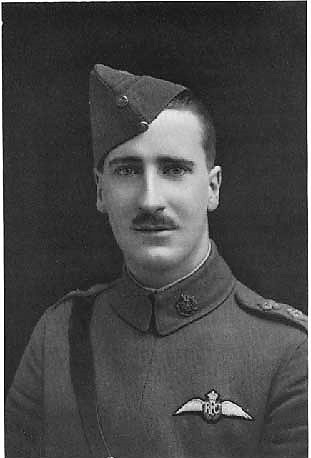
- Age: 24
- From: Waterloo, Liverpool
- Regiment: RAF No.5 Training Sec 19th Btn
- Died on Saturday 1st June 1918
- Commemorated at: Anfield Cem Liverpool
Panel Ref: VIII.C1543
Peter Dudley Stuart was born on the 04th April 1894 at Waterloo, Lancashire and was the son of Peter Stuart and his wife Edith Kate (nee Simpson) of Drummoyne, Serpentine North, Blundellsands, Crosby.
His father was a Rodney Street specialist in Homeopathy, Stuart Peter, M .D ., L .R .C .P ., L.R .C .S, and L .M . 36a Rodney Street, and Drummoyne, The Serpentine North, Blundellsands.
The 1901 Census finds Dudley aged 6 living with his parents, brother and six servants at 36 Rodney Street, Liverpool. His father is aged 49, born in Ditton and descried as a medical man, whilst his mother is aged 38 and was born in Nottingham. His brother Ronald F. is 12 years of age.
The 1911 Census shows that the family are now residing at "Drummoyne", The Serpentine, Blundellsands. Dudley is now aged 16 and still at school. His father is now 58 and his mother is 48, they advised that they have been married for 23 years and have had two children. Also present in the records are four servants.
Known in the family as Dudley he was educated at Parkfield School, and was looking to a career in Medicine. He was a member of both West Lancashire and Formby Golf Clubs.
He enlisted in August 1914 and joined the 17th Battalion of The King's Liverpool Regiment as Private No 15033. On the 3rd September 1914, he received his commission (2nd Lieutenant).
He had flown before the war commenced and on the 11th May 1916 received his Royal Aero Club of the UK Aviators certificate from the 22nd Battalion of The King's Liverpool Regiment, 2nd Lieutenant and transferred to the Royal Flying Corps (Military Wing) where he graduated on the 22nd June 1916. From July 1916- to June 1917 he was in France where his missions included aerial reconnaissance behind enemy lines and he was awarded the Croix De Guerre with Palme. He was promoted to the rank of Captain on the 17th March 1917 and returned to France in June 1917 to become a training officer for new pilots.
In June 1918 he should have been on leave but due to a shortage of pilots he went to Easton Aerodrome, Lincolnshire to help out. He was instructing a trainee pilot when their plane crashed killing them both instantly. Dudley's death certificate showed his cause of death as: Fracture of spinal column cervical region sustained through the aeroplane in which he was flying accidentally crashing to the ground.
Liverpool's Scroll of Fame paid tribute to him as follows:
"It was the air, with its romance, it magnificent freedom, and it's novel opportunities that called from boyhood to Peter Dudley Stuart, who at the age of 24 was a Captain of Britain's great aerial arm of defence, and lost his life not on the battle front, where he had won the Croix de Guerre, but through an unfortunate accidetn to his machine while flying at home.
Captain Stuart came of a well-known and highly respected Liverpool family, being the son of the late Dr. Peter Stuart of 36a Rodney Street, and of Mrs E.K. Stuart of Drummoyne, Blundellsands. His paternal grandfather, a descendant of the Royal Stuarts, was Mr Peter Stuart, J.P., of Elm House, Seaforth, who gave his influence and wealth in support of the movement for the emancipation of Italy; Garribaldi, Mazzini and Orsini were honoured guests at his house, and a shirt of the first-named soldier-patriot is still treasured as a relic by the family.
On his mother's side Captain Stuart was a grandson of the late Mr Henry Simpson, of Highfields, Lenton, Notts. He was educated at Parkfield School, Liverpool, and afterwards, owing to ill health, under a private tutor, with a view to a medical career.
On the formation of the Pals, in August 1914, he joined as Private, and on the 3rd September he recieved his commission in the 19th King's (Liverpool Regiment). He had flown on several occasions before the declaration of war, and transferring to the Royal Flying Corps (Military Wing) graduated on the 22nd June 1916, having flown in M.F., (S.H.) B.E.2c, a.w.b., and Avro machines. From July 16th 1916 to June 17th 1917 he was in France, and during those eleven months he did most valuable work, and was awarded the Croix de Guerre for special service, and on the 17th March 1917 was promoted to the rank of Captain.
His father died on 12th April 1917.
A letter from a friend E.L.Gossage dated 19th July 1917:
"My dear Stuart, Very many thanks for your letter & congratulations & let me thank you again for your share in bringing about the great event! I am glad to hear that you are now back again in England (or rather Scotland), & I rather think that your capabilities are somewhat wasted on 'Rumpeties'. Don't go & 'do yourself in' on the cables of the Forth bridge or the wireless aerials of our latest battleships by stunting too close to them, as your future lies undoubtedly in a Scout Squadron & the sooner you advertise the fact the better. No. 8 is still a happy crowd but I think that the Squadron Commander is the happiest person in it at present & they all send you their best wishes. I am not all keen on being out here too long now as I have arranged to get married when I next come home for a 'spell' or 'on leave'. I am glad you enjoyed your stay with the 2nd Brigade. I am afraid I did not quite know what I had let you in for but I am glad that it has turned out all right. My fiancee probably saw you trying to jump the funnels of the battleships as she has recently been staying at Aberdeen which is close to the Bridge. The idea of Thinhouse? sounds rather attractive to me, except for its distance from everywhere & its 3.15 am in the morning! It is not you who ought to thank me for kindness, but rather I should thank you for all you did for me when you were here; for without fellows like you, the show would never have run at all. I think you will probably like the Sopwith 'Pup' but the SE5 is your metier & you must try for that. All best wishes & good luck, Ever yours very sincerely, E. L. Gossage."
In June of that year he returned to England, and after a fortnight's rest was sent to Scotland as an Instructor. Subsequently, he was stationed at various aerodromes in England. On the 01st June 1918, he was instructing a pupil (Lieut. Francis Powell Ayles) at Easton Hill Aerodrome, Stamford, in a D.H.6., when the machine got out of control, and he was unfortunately killed.
His mechanic describing the accident, wrote that Captain Stuart was in his favourite machine when the sad occurence took place.
"The first time he circled round in the air, instructing his pupil with his usual calm and carefulness. Then he came down, stepped out, and told the men that he had seen another machine away in the corner of the aerodrome which required it's propeller swinging. After that he stepped back into his machine, his pupil in the pilot's seat, and went up again. All eyes were watching as he was circling around, and when his aeroplane was about 200 feet up in the air it was suddenly seen that he was coming down. For an instant nobody could move; then when they did move, although it did not take half a minute to get to his machine, your son had already passed away. From that hour the sorrow that came over his pupils, his officers, his sergeants, and all his men, I cannot describe to you. Your son was such a good Captain to us in every way that even now his name is always being spoken of with regret whenever we compare him with our other officers who from time to time are over us. We were never frightened of him because we knew he would never speak to us in any other way than nicely, and many and many a time when everything was going badly with us we all knew that when he came we need not fear. I could tell you of such a lot of his goodness to us and the things he used to say , and his kind actions, and he has left such a good name behind him".
His commanding officer, Major Andre Adolphus Walser M.C., D.F.C., M.I.D. 28/01/1916 & 07/11/1917, CDG (France) paid this tribute:-
"Your son was a good pilot and a very gallant officer. I looked upon him as a personal friend, and he was certainly one of the best and most capable officers under my command. I cannot tell you how sorry I am to write this sad letter. I feel your son's loss very deeply. He had distinguished himself overseas, and he died here doing his duty for his country. I was on the spot a few seconds after the crash, and lifted his body out of the wreckage. He was quite dead and so cannot have suffered, as his death was instantaneous. Allow me to express the very sincere sympathy that I feel for you in your great loss. England loses in him a good officer, and a very gallant gentleman"
Dudley was buried at Anfield Cemetery in the family plot. The funeral address paid a handsome tribute to him and all of the fallen and desrves to be read:
"We are committing to Mother Earth all that was mortal of our dear Brother. The Angel of Death has been very busy amongst us. We seem almost "to hear the rustling of his wings". As in the old bible story there is "Scarce a house where there is not one dead" but the tragedy of it is that it is our youngest and bravest and best who are being called away, those for whom we had cherished high hopes. How splendid our youth has been: splendid that is the only word. Their own friends and relatives, their dearest ones, did not know how fine they were. When the summons came, how quickly they responded-
"So nigh is grandeur to our dust,
So near is God to man,
When duty whispers, lo, thou must,
The youth replies "I can".
But the brave young souls whom we think of today have not died in vain. They have enhanced the value of our common humanity, they have glorified God by their death, striking a blow for freedom and right and homeland, preparing the way for the newer, better England, better Europe we hope to see. When we think of it, we almost envy them, we feel our own lives to have born so vain and pointless. They have done something, and if they could speak to us today they would say "Carry on", "Carry on", until the goal is reached, until teh goal is reached, that is completed which we gave our lives to attain.
It seems so short a time since I saw Dudley Stuart in the flush of health and strength - I was so attracted to him, there was something so straight and honest about him. Here, I said to myself, is a true man. I cherish the memory of that chance meeting, all the more so since in his infant years I had admitted him into the fold of Christ. From our heart of hearts we pray to God to comfort his bereaved relatives, to grant them the sense of his upholding presence. These braver young souls gave all. As the Savoyard peasant said "God found them ready". How shall we speak of them or pray for them now that they are gone. In regard of those of advanced or advancing years, when they are called away it is phrases about rest and peace which come to our lips, but they seem out of place. It is not rest and peace they would crave for, that would mean simply stagnation, whereas they were full of abounding hope, and the spirit of limitless adventure. How shall we speak of them? Perhaps the first of the King's Regulations and Orders for the Army may suggest something-
The Army is composed of those who have undertaken a definite liability of Service". Service - that is the word. They died on service, service truly for God and man, and on service they are still. Death does not interrupt, God's plan for them is not frustrated by it. We are as dear to God when wounded or dying or dead as when in the prime of health. He has his purpose for each and that purpose still holds good -
"What here is well begun
is then completed not undone,
He careth for them and they are still on service,
God judges by a light
Which baffles mortal sight, and the fallen soldier lad the crown hath won,
In his vast world above
A world of broader love,
God has some grand employment for his son".
So lovingly, trustingly we leave him in the hands of him who is his faithful Creator and Merciful Saviour, may perpetual light shine upon him".
His death was recorded in the Liverpool Echo on 03rd June 1918
LOCAL FLYING OFFICER KILLED
A severe bereavement has befallen a well-known Liverpool family through a fatal accident to Captain Peter Dudley Stuart R.A.F., Croix de Guerre. Captain Stuart who was killed while flying in Lincolnshire on Saturday, was the younger son of Mrs E.K. Stuart and the late Dr Peter Stuart, of "Drummoyne," Blundellsands, and grandson of the late Peter Stuart of Elm House, Seaforth.
His death was also reported a week later in the Liverpool Echo on 10th June 1918
AN HONOURED NAME
Captain Peter Dudley Stuart, who was killed in a flying accident was a son of the late Peter Stuart, well-known in the Seaforth district at one time as "the Ditton doctor." Something sadly appropriate is to be found in the fact that the young officer gave his life in freedom's cause, for in his generation his grandfather, who claimed descent from the Royal Stuart's, had given his influence and wealth in support of the movement for the emancipation of Italy. Garibaldi, Mazzini and Orsini were honoured guests at his house, and the shirt of the first-named soldier patriot, is, indeed a treasured relic of the family in Liverpool.
Dudley now rests in the family grave in Anfield Cemetery, Liverpool, Section 8 No.1543 Vault.
Soldiers Effects to his mother Edith (Exec. Ronald Stuart)
Probate was granted to his mother Edith Kate and his brother Francis Ronald Stuart on 13th September 1918 at Liverpool in the sum of £12,617 10s 2d.
Dudley is also commemorated on the following Memorials:
Hall of Remembrance, Liverpool Town Hall, Panel 40
St Nicholas Church, Blundellsands
Formby Golf Club
West Lancashire Golf Club.
Both Dudley Stuart and Francis Powell Ayles are commemortated on the Easton on the Hill Memorial.
We currently have no further information on Peter Carroll Dudley Stuart, If you have or know someone who may be able to add to the history of this soldier, please contact us.
Killed On This Day.
(109 Years this day)Friday 1st June 1917.
Pte 29979 Claude Thomas Bicker
22 years old
(108 Years this day)
Saturday 1st June 1918.
Pte 50652 Alfred Barnes
21 years old
(108 Years this day)
Saturday 1st June 1918.
Captain Peter Carroll Dudley Stuart (CDG)
24 years old