
1885 - 1916

CPL David Wallace Crawford
1887 - 1916

Lce-Corpl John Joseph Nickle
1894 - 1916

Pte 17911 Morton Neill
1897 - 1916

Lieut Edward Stanley Ashcroft
1883 - 1918

2nd Lieut George Andrew Herdman
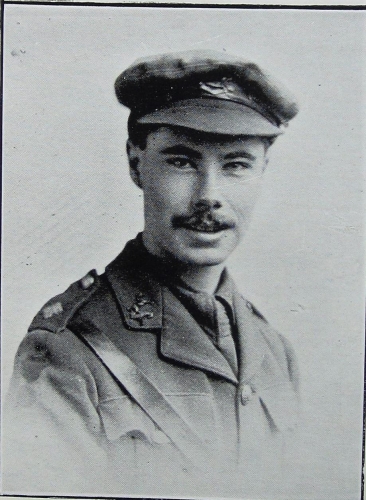
- Age: 20
- From: Liverpool
- Regiment: The King's (Liverpool Regiment) 18th Btn
- K.I.A Saturday 1st July 1916
- Commemorated at: Thiepval Memorial
Panel Ref: P&F1D8B &8 C.
Temporary 2nd Lieutenant George Andrew HERDMAN, 18th Battalion KLR.
George was born in 1895 in Liverpool, the only son and elder of two children born to Professor Sir William Abbott Herdman and his second wife Jane Brandreth (nee Holt) who were married in 1893 in Toxteth. His father’s first marriage was in 1882 to Sarah Wyse Douglas in Edinburgh, she sadly died, aged just 24, in 1886.
His father had been a Professor of Natural History at Edinburgh University before taking up a similar position at Liverpool University College, the original Liverpool University.
In 1901 and 1911, William, Jane and their children, George Andrew and Emma Catherine, lived in Croxteth Lodge, Ullet Road, a house with twenty rooms and perhaps understandably they felt the need to employ five servants.
On the 1911 census father William Abbott is aged 53, mother Jane Brandreth is aged 33 have been married for 17 years, and have had two children. Both of their children are declared in the Census; George Andrew aged 15, is at school and Emma Catherine aged 12 is also at school. The five servants are now a cook, a “between maid”, a sewing maid, housemaid and waitress.
George was educated at Greenbank School and Clifton College and was a scholar of Trinity College, Cambridge, reading Physics and Chemistry.
On the 22nd June 1914 the family left Southampton for Adelaide on the Blue Funnel Line SS “Ascanius”. On 17th October 1914, the Herdman family had returned by sea from Australia, travelling first class, along with a number of other academics and their families, aboard the P & O ship the “Morea”.
He later joined the Officers Training Corps in December 1914.
George was gazetted to the 15th Battalion King’s (Liverpool) Regiment on 12th January 1915. He was soon posted to the 1st/7th Battalion King’s (Liverpool) Regiment and crossed to France on the 18/08/1915.
During the autumn and winter of that year, he served in the La Bassee region of France and gained a reputation as a daring bomber and night raider. On one occasion he was arrested by British Military Police as a suspected spy. In February 1916, he was transferred to the 18th Battalion and served with this unit until he was killed in action on 01st July 1916 aged 20 years.
The Battalion’s objectives on the day, were the capture of the German front and second line trenches and the German fortified position known as the Glatz Redoubt. That would allow the 19th Battalion The Manchester Regiment, to follow through and capture the village of Montauban. At 4am, even before the attack commenced, Herdman was wounded in the head and face by an exploding bomb, but refused to leave his men to seek treatment at the dressing station.
His task in the attack, was to lead his party of bombers forward to clear the German trenches and dugouts, as the Battalion advanced. The advance was held up by enfilading fire from a machine-gun firing from Alt Trench, on the left flank. This gun was protected by snipers firing from Train Alley, and bombers who held a fortified position in Alt Trench, at right angles to Alt Alley, and who were hidden by a rough tree hedge.
The first bombing parties who moved forward to eliminate the position were immediately cut down by snipers, and as Herdman and his bombers went up, he himself was struck by a German bomb which blew his head to pieces. He was twenty years of age.
In a interview given in 1984, former 16400 Private SR Steele recalled seeing Herdman's headless corpse on the battlefield, but the body must have been lost subsequently, as Second-Lieutenant Herdman does not have a grave today, and is commemorated on the Memorial to the Missing of the Somme at Theipval.
The Thiepval Memorial, the Memorial to the Missing of the Somme, bears the names of more than 72,000 officers and men of the United Kingdom and South African forces who died in the Somme sector before 20 March 1918 and have no known grave. Over 90% of those commemorated died between July and November 1916.
On 01st August 1932 the Prince of Wales and the President of France inaugurated the Thiepval Memorial in Picardy. The inscription reads: “Here are recorded the names of officers and men of the British Armies who fell on the Somme battlefields between July 1915 and March 1918 but to whom the fortune of war denied the known and honoured burial given to their comrades in death.”
His death was reported in the Isle of Man Examiner on the 15th July 1916:
LIEUT. HERDMAN KILLED IN ACTON.
Second-Lieut. George Andrew Herdman, of the King’s Liverpool Regiment, who has been killed in France, was the only son of Professor and Mrs W. A. Herdman, of Croxteth Lodge, Liverpool, and Port Erin. He was educated at Greenbank School and Clifton College, was a scholar of Trinity College, Cambridge, and joined the Cambridge O.T.C. in October, 1914, He was gazetted to the King’s Liverpool Regiment in January, 1915, and was sent to France in August. He was twenty years of age. This gallant young soldier was well-known in Port Erin, where his father is identified with the Biological Station.
In a letter to his parents, the Battalion Commander Lieutenant Colonel E H Trotter DSO wrote,
“Your boy was fighting most gallantly and attempting to drive a flanking party of the enemy out, who were doing considerable damage, when he was struck by a bomb and death was instantaneous. “
Lieutenant HC Watkins, who eventually overcame the German Stronghold, and was later awarded the Military Cross for the action, also wrote,
“You will no doubt have heard by this time from our Colonel of the glorious way your son died,............. I found your son right ahead of everyone else, and it was through him getting round on the enemy’s flank that many of our men’s lives were saved."
He was named among those lost on the 01st July 1916 in the Liverpool Echo on the 02nd July 1917:
Lost At The Somme Battle:
To the Glorious Memory of Lieut.-Colonel E. H. Trotter, D.S.O., Captain A. de Bels Adam, Captain C. N. Brockbank, Lieut. G. M. Dawsin, Lieut. B. Withy, Sec.-Lieut. N. A. Barnard, Sec.-Lieut. L. R. Davies, Sec.-Lieut. E. Fitzbrown, Sec.-Lieut. D. M. Griffin, Sec.-Lieut. G. B. Golds, Sec.-Lieut. G. A. Herdman, Sec.-Lieut. R. V. Merry, Sec.-Lieut. R. H. Tomlinson, Sec.-Lieut. T. R. Walker, and the non-commissioned officers and men the 18th (Serv.) Battalion “The King's” (Liverpool Regiment), who fell in the battle of the Somme, July, 1916.
Mona's Herald, Wednesday, January 10, 1917
The George Herdman Memorial Institute.
OPENING CEREMONY.
HANDSOME GIFT TO PORT ERIN.
The Herdman Institute, which Prof. W. A. Herdman, the eminent marine biologist, and Mrs Herdman have presented to the men of Port Erin, in memory of their son, Second Lieut. Geo. Andrew Herdman, who was killed in action on the 1st July last, was formally opened on Thursday. The building, which formerly consisted of three lock-up shops, with a dwellinghouse in the rear, was purchased by Professor and Mrs Herdman, and the whole front was re-modelled and extensive alterations made in the interior; so that it is now admirably adapted for the purpose of a reading and recreation room. The premises consist of a lower room, which is to be used as a refreshment room and for the reading of newspapers; and an upper room, designed for a library and recreation room. On the walls of the upper room, above the fire-place has been placed a portrait of the dead officer, and beneath it a metal tablet, bearing the following inscription "This institute is founded in memoir of George Andrew Herdman, Second Lieutenant, 18th King's Liverpool Regiment, killed in action near Montauban, at the Battle of the Somme, 1st July, 1916, aged 20, and is given to the men of Port Erin by his father and mother. December, 1916."
Herdman’s father was later to write in 1920, the introduction to a memorial book of Liverpool’s dead officers, entitled Liverpool’s Scroll of Fame, in which he wrote with feeling, of the duty and sacrifice of young heroes.
Soldiers Effects to father Professor William Abbott Herdman F.R.S., no Pension record found.
George's medals were received by his father in 1922.
To return to George’s parents - his father wrote and had published privately a book of 147 pages which he entitled “George Andrew Herdman 1895-1916 - the record of a short but strenuous life”. On which his father commented:
"For the selfish and loving reason that we wished to have a record of the outline of his short life and of the events of his boyhood that we love to recall written down while all is still fresh in our memories. He died like so many others on the opening day of that great battle of the Somme – in which he led his men, they say, with a smiling face, performing at the end a gallant action which his superior officer says saved many lives in the battalion".
George’s parents also endowed the “George Herdman Chair of Oceanography” in Liverpool University and the “George Herdman Institute” in Port Erin, Isle of Man in his memory. This was reported as follows:
NEW SCHOLARSHIPS
The council have gratefully accepted the foundation of the following scholarships:-
The George Herdman scholarship founded by Professor W.A. Herdman F.R.S,, and Mrs Herdman, in memory of their son George Andrew Herdman (O.C.), Second Lieutenant, the King's Liverpool Regiment, who was killed in action at the Battle of the Somme, 1st of July 1916. The scholarship is of the value of £50 per annum and is tenable for three years, which may be extended to four, at the University of Cambridge or at the University of Oxford.
George’s father is widely acknowledged as having been one of the world’s foremost marine zoologists and oceanographers and was knighted in 1922. Sadly his wife died that same year and William donated in her memory £20,000 towards the building of new Oceanography laboratories at Liverpool University, which still bear his name.
Portraits of both William and George Andrew, painted by William’s brother, Robert Duddingston Herdman, hang in the Victoria Gallery and Museum within the University.
George is also remembered on the following memorials:
Hall of Remembrance, Liverpool Town Hall, Panel 51 Left
Liverpool University, Victoria Hall, Brownlow Hill.
The George Herdman Memorial Institute, Port Erin, IOM.
His name also appears on the Trinity College War Memorial, Cambridge, suggesting that he had taken up a place at the College before enlisting.
His mother died, aged 55, on the 07th November 1922 in Liverpool.
His father died, aged 65, the 21st July 1924 in London and was buried at Highgate Cemetery, London.
Probate 1925:-
HERDMAN Sir William Abbott Kt., Croxteth Lodge, Ullet Road, Liverpool died 21 July 1924 at London testate. Probate of the Will and Codicil granted London 5 November 1924 to Beatrice Sophie Roaf, Winifred Flora Phillips and Emma Catherine Herdman, the daughters, and Herbert Eldon Roaf, the Executors. Certified at Edinburgh 8 January. Value of Estate £38,282 2s 11d.
We currently have no further information on George Andrew Herdman, if you have or know someone who may be able to add to the history of this soldier, please contact us.
Killed On This Day.
(109 Years this day)Tuesday 5th June 1917.
Pte 23113 James Mellor
25 years old
(108 Years this day)
Wednesday 5th June 1918.
Pte James Douglas Quilliam
23 years old
(108 Years this day)
Wednesday 5th June 1918.
Pte 31175 Richard Bretherton
31 years old